Lesson 7 · 10 min
Posture, hand shape and fingering
How to sit, how to hold your hands, and what the finger numbers mean.
In the app the figures sound and answer to your keyboard, and the exercises check what you play.
How you sit and hold your hands decides what your fingers can do. Good habits are easier to build at the start than to mend later, and they keep playing comfortable for as long as you practise.
Sitting at the piano
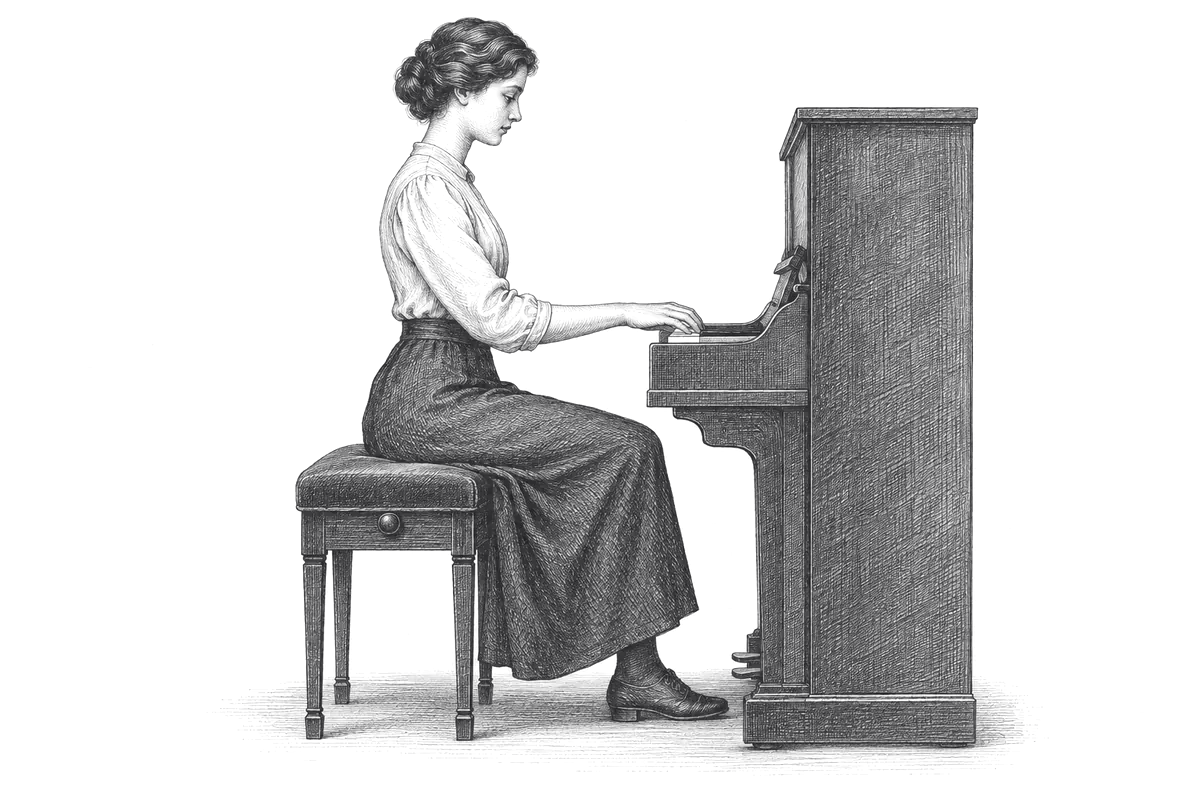
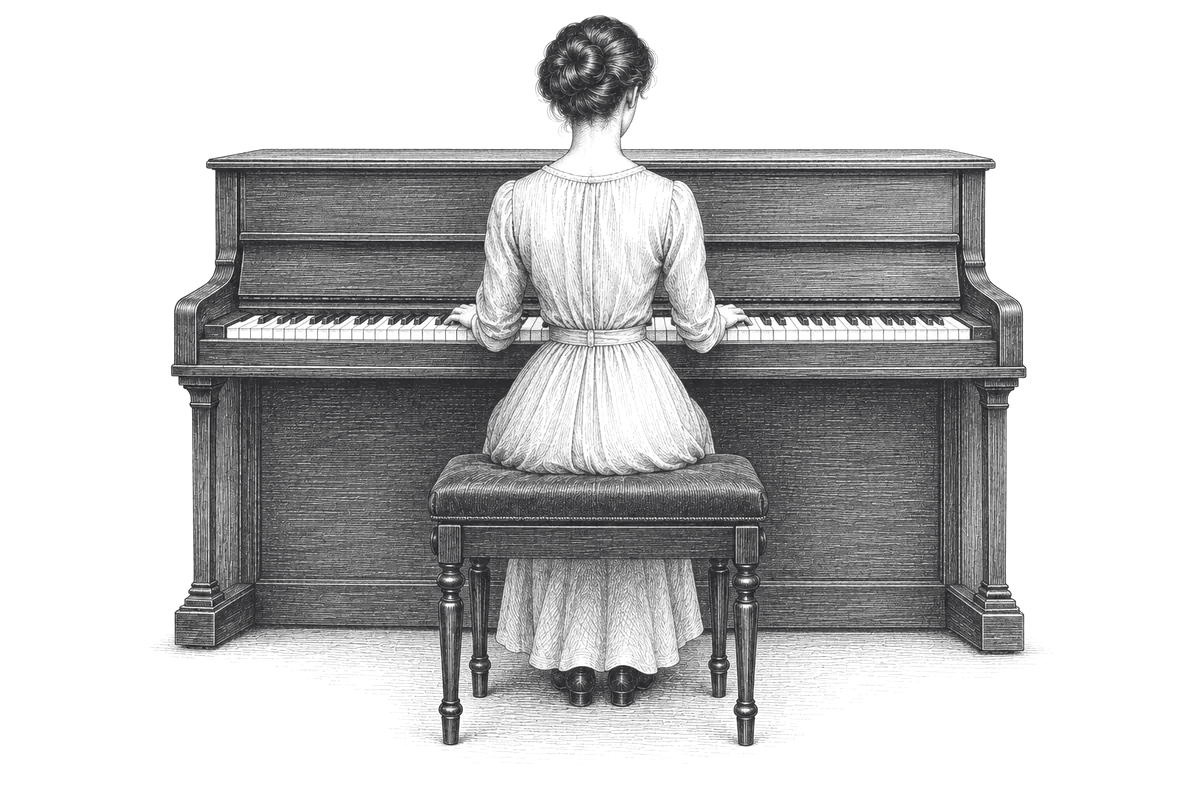
- Sit on the front half of the bench, facing middle C.
- Height: your forearms roughly level with the keys. Too low and the wrists sag below the keys; too high and the shoulders creep up. Raise the bench, or sit on a firm cushion.
- Distance: with your hands on the keys, your elbows are a little in front of your body. If they press into your sides, move the bench back.
- Back upright, leaning very slightly forward from the hips; shoulders low and loose.
- Both feet flat on the floor, the right one near the pedal.
The shape of the hand
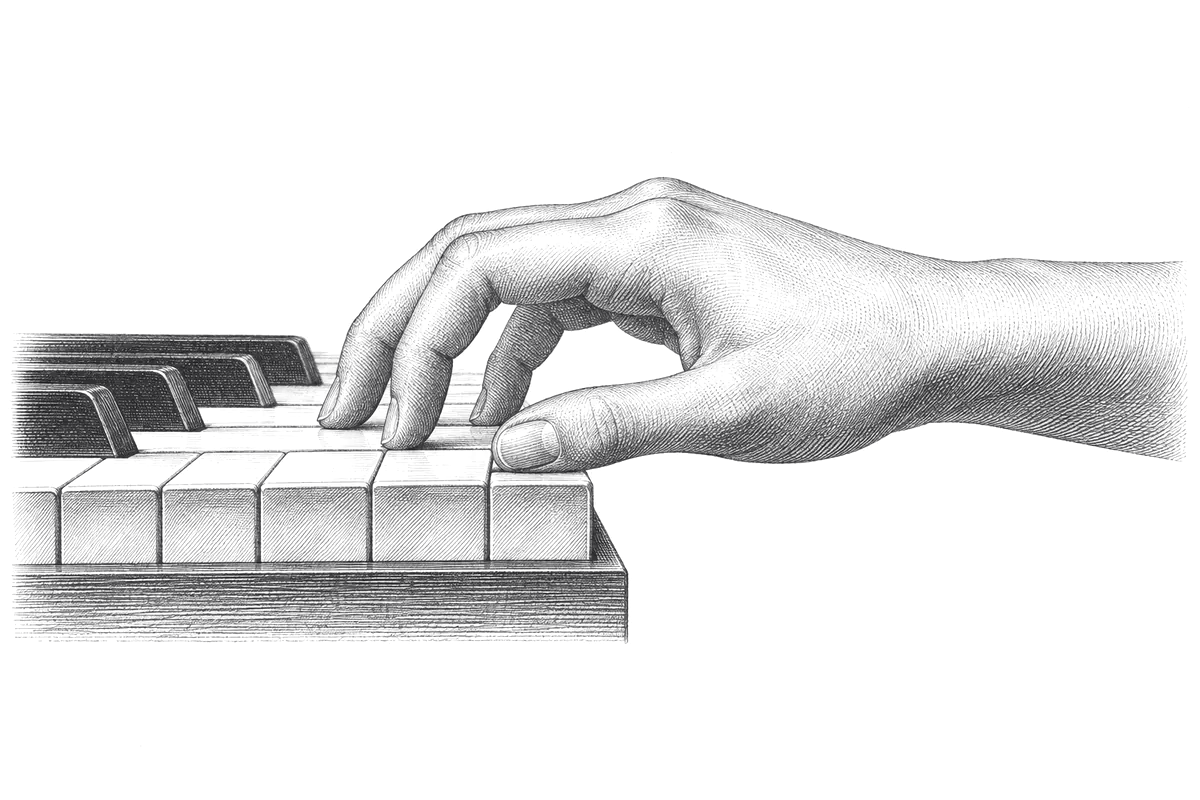
Let your arm hang at your side, then bring the hand up to the keys without changing its shape: the fingers fall into a natural curve. Play on the fingertips, not the flat pads, and on the outer corner of the thumb. Keep the wrist level, neither dropped below the keys nor raised above the hand.
Finger numbers
Piano music numbers the fingers the same way in both hands: the thumb is 1, the index finger 2, the middle finger 3, the ring finger 4, the little finger 5.
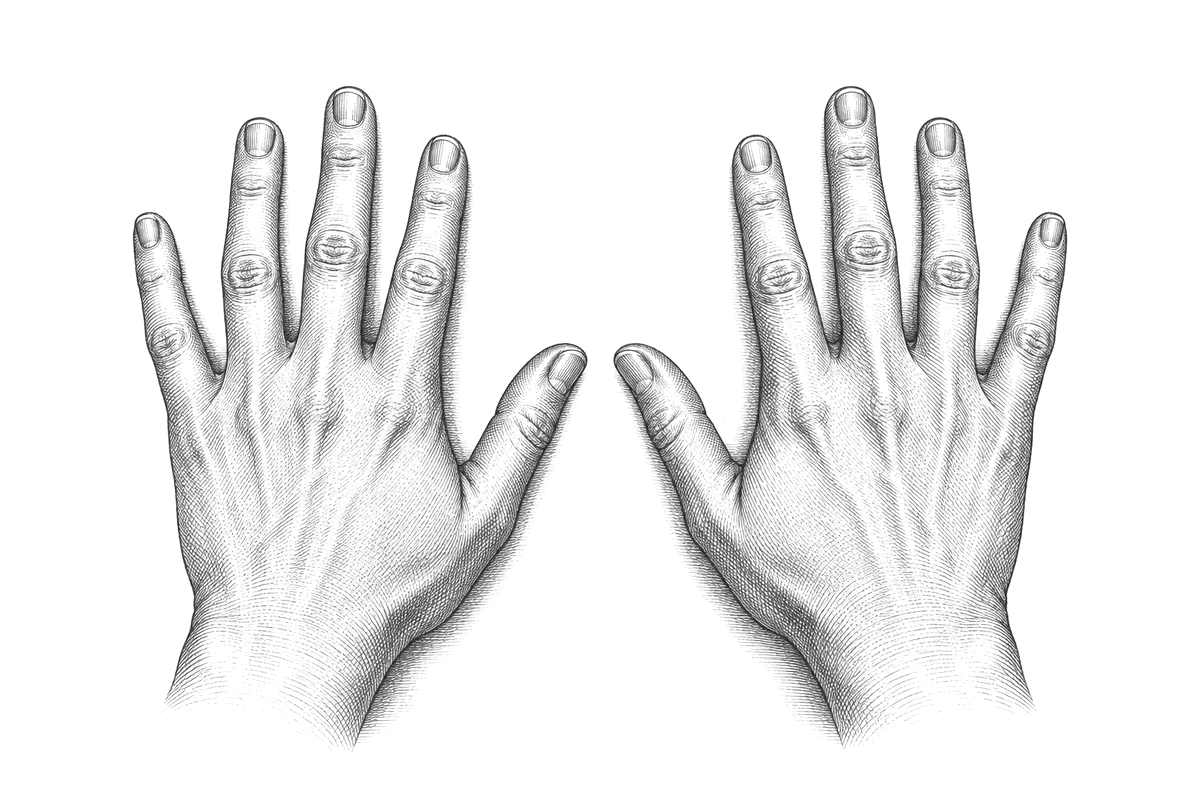
A score prints them over the notes where a particular finger is suggested:
The five-finger position
Put each finger of the right hand over its own white key, the thumb on middle C: 1 on C, 2 on D, 3 on E, 4 on F, 5 on G. The left hand mirrors it an octave lower, the little finger on C3 and the thumb on G3. This is the C position, and many first pieces never leave it.
Try it
One finger to each key, up and back down, keeping the curve. Watch the marked finger, not just the key.
This exercise is played in the app.
This exercise is played in the app.
Keep this shape and everything that follows comes easier. From here, Play, Read and the first Pieces put it all to work.